Problematic
We have observed that currently there are many foundations dedicated to the rescue of dogs and cats that have difficulties in organizing their structure, for example: coordinating the people in transit, managing donations, posting about the rescued dogs and cats, scheduling veterinary visits, and remembering to provide medication to the animals that need it. The lack of tools limits the possibility of action and delays the resolution of the different tasks of the foundation.
Objectives
Facilitate the organization of different tasks and activities.
Allow for better communication between coordinators and collaborators.
Facilitate traffic personnel in managing schedules and caregiving responsibilities.
Ensure the proper care of each of the rescued animals.
Provide reliability and credibility so that people can make financial contributions.
Hypothesis
We believe that by creating a digital product we will facilitate the management and execution of the various activities for which the foundation is responsible, managing to reduce the obstacles that may arise in the future by simplifying the process for the different collaborators and coordinators
Qualitative interviews
Thanks to the interviews, we were able to identify some key points that are repeated among the interviewees:
Social networks are very important tools for rescuers, as they generate the dissemination of rescued animals so that people can collaborate either by adopting, helping financially, providing foster homes, etc. Without networks, they could not rescue so many animals.
An ideal app model would have a section where the coordinator can directly contact the people who applied as transits and ask them for help. Additionally, something desirable would be for the app to send them notifications such as reminders of the activities they have scheduled.
There are two frustrations that they have to deal with, the lack of financial assistance they face day by day from the community and the state, and the irresponsibility on the part of families when they return an animal that has already been adopted.
The lack of time for personal activities is a factor that influences quality of life, as they often dedicate more than 10 hours a day to animal rescue.
During the activity, it happens that it becomes difficult to find people quickly who apply to provide foster care and/or help with the transportation of the animals.
Everyone concludes that the most enjoyable experience is when they are adopted out, especially if they went through a difficult recovery, and the least enjoyable experience is the lack of commitment from the people who collaborate.

Miguel
40 years
Product seller
Córdoba capital
Miguel is a merchant of various products from the city of Córdoba, he has 3 dogs and 2 cats. For 10 years, he has been rescuing animals in situations of street homelessness, and he dedicates about 10 hours a day to that activity, although he does not consider it a job.
Motivations
Knowing that it improves the quality of life for many animals
The number of animals that arrive at the association with negative diagnoses can overcome difficulties and improve.
Goals
Your main goal is to have more collaborators in order to rescue more animals.
Achieve that people understand the problem and become part of the solution
Reduce the time dedicated to rescues by using a digital tool
Frustrations
People do not collaborate or commit
Many times, people approach the foundation only to report a case of need, but do nothing to help.
Skills
Social networks
Devices (Smartphones, tablets, kindle)
Professional software
User persona
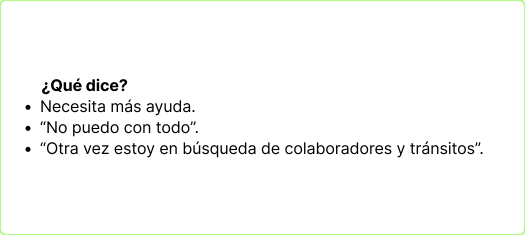
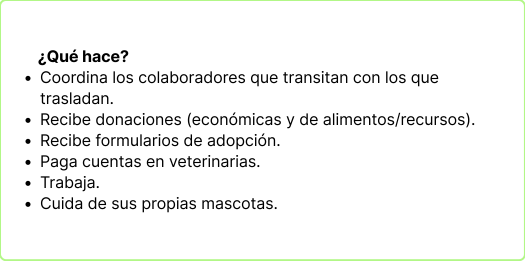
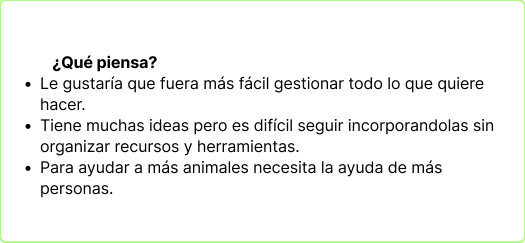
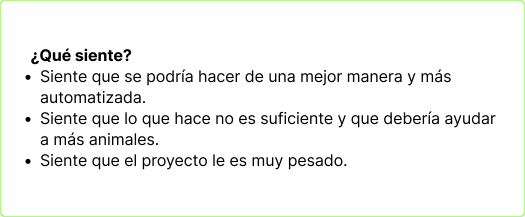
Empathy map
Storytelling
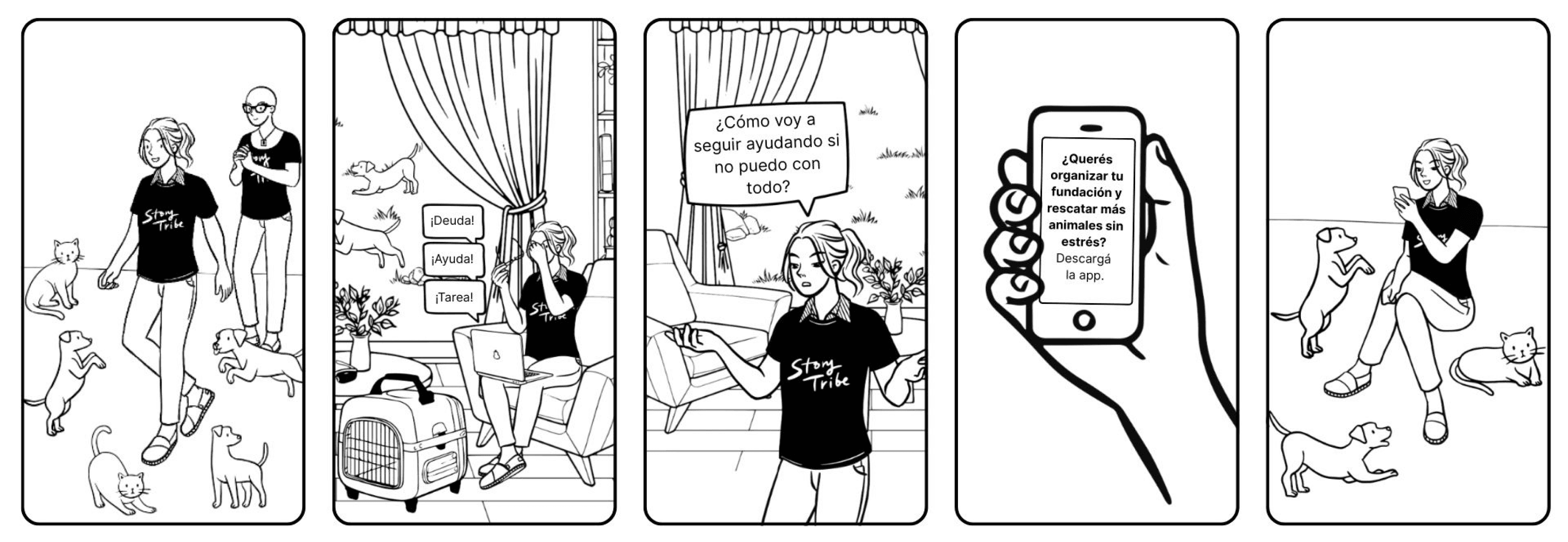
Julieta loves animals. She coordinates a rescue foundation with her friends, but every day she feels that the work is overwhelming: too many cases, too few hands, and a lot of chaos.
Social networks are useful, but not enough. The lack of organization complicates everything: unassigned tasks, insufficient resources, uninformed collaborators.
Julieta feels exhausted.
The animals still need help, and that causes her anxiety and frustration.
One day, she sees a post and intrigued, downloads the app. She discovers that it can schedule tasks, coordinate volunteers, and manage donations all in one place.
Finally feels tranquility and control. Now spends more time on what really matters: rescuing and giving more animals up for adoption.
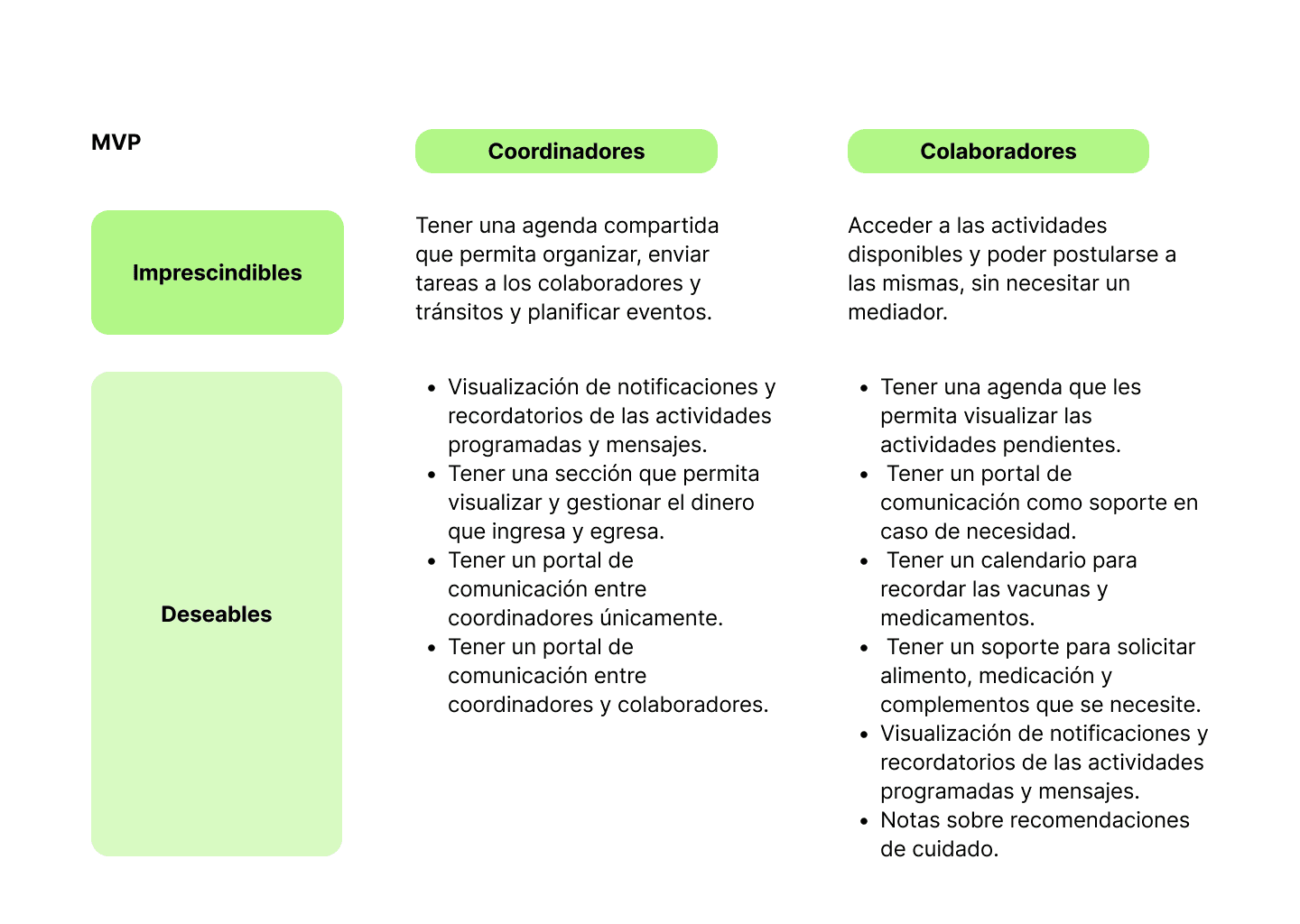
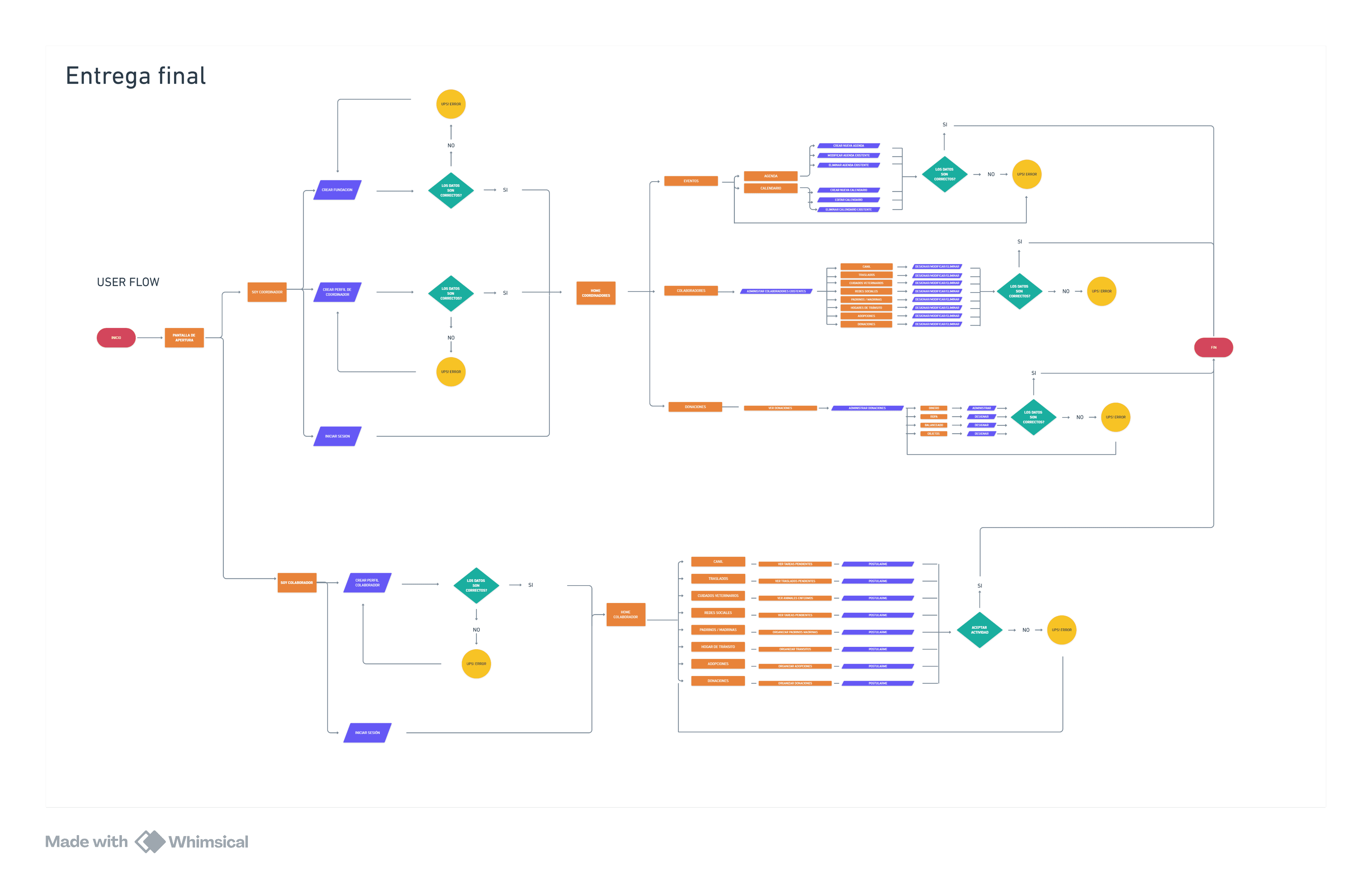
Sitemap
Income
Coordinators
Home
What is your role?
Coordinator "Agenda/Events"
Coordinator "Collaborators"
"Donations" Coordinator
How would you like to help today?
Veterinary care
Transfers
Transitional home
Adoptions
Sponsor
Donations
Puppy pens
Social Networks
News/Information
Home
Collaborators
Low-fidelity wireframes
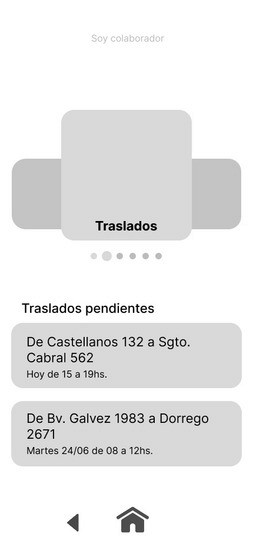
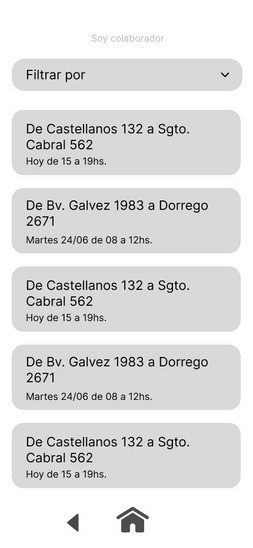
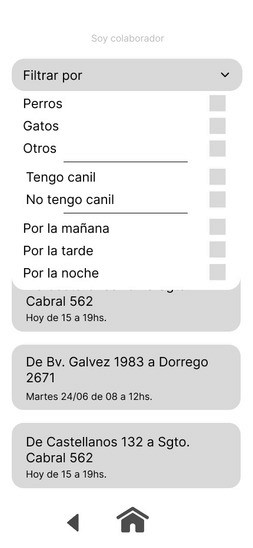
For the low-fidelity wireframes, we began exploring Figma with very simple screens, trying to translate the ideas from the paper wireframes while also proposing new screens.
Design System
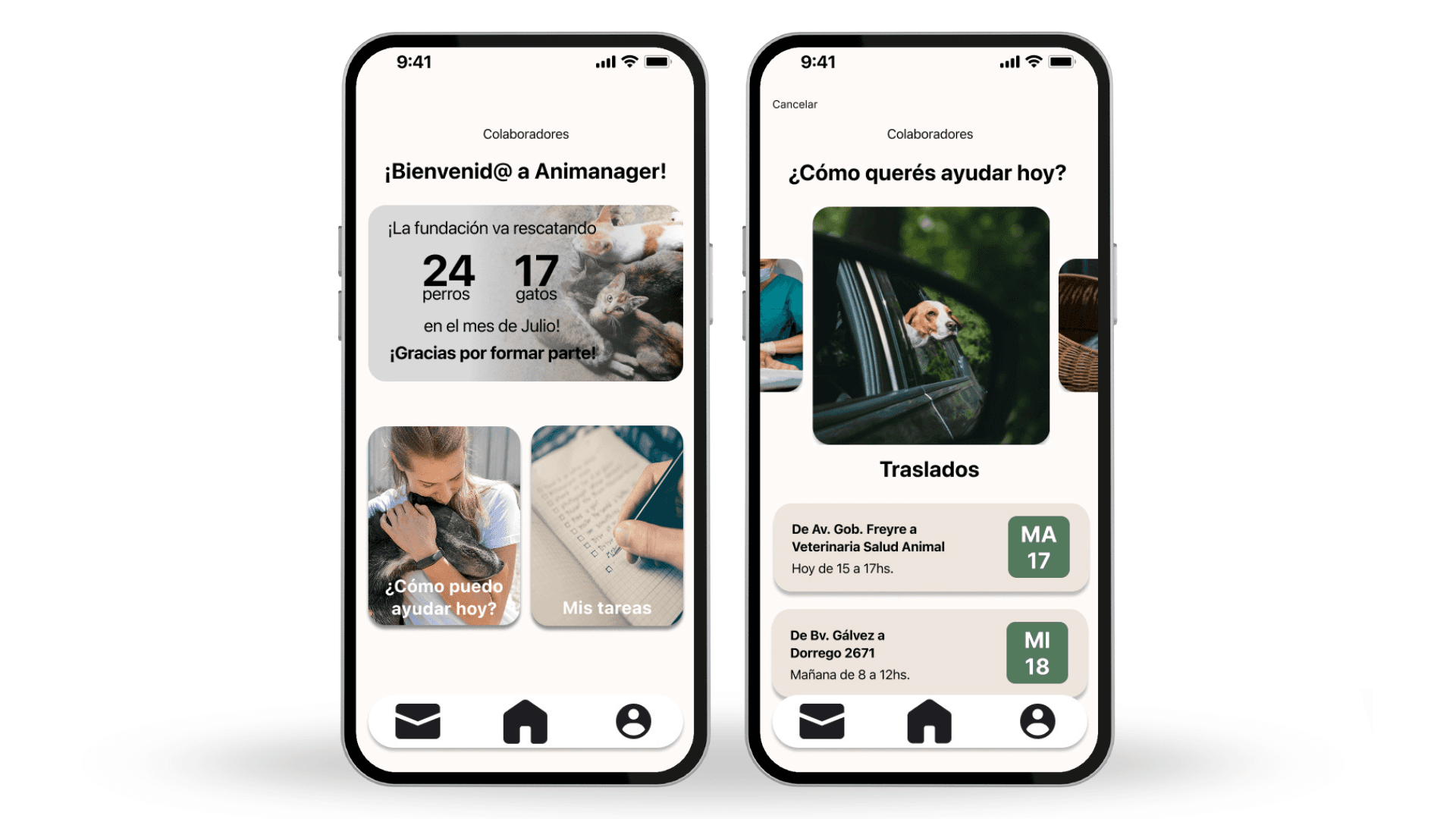
Bottom navigation bar:
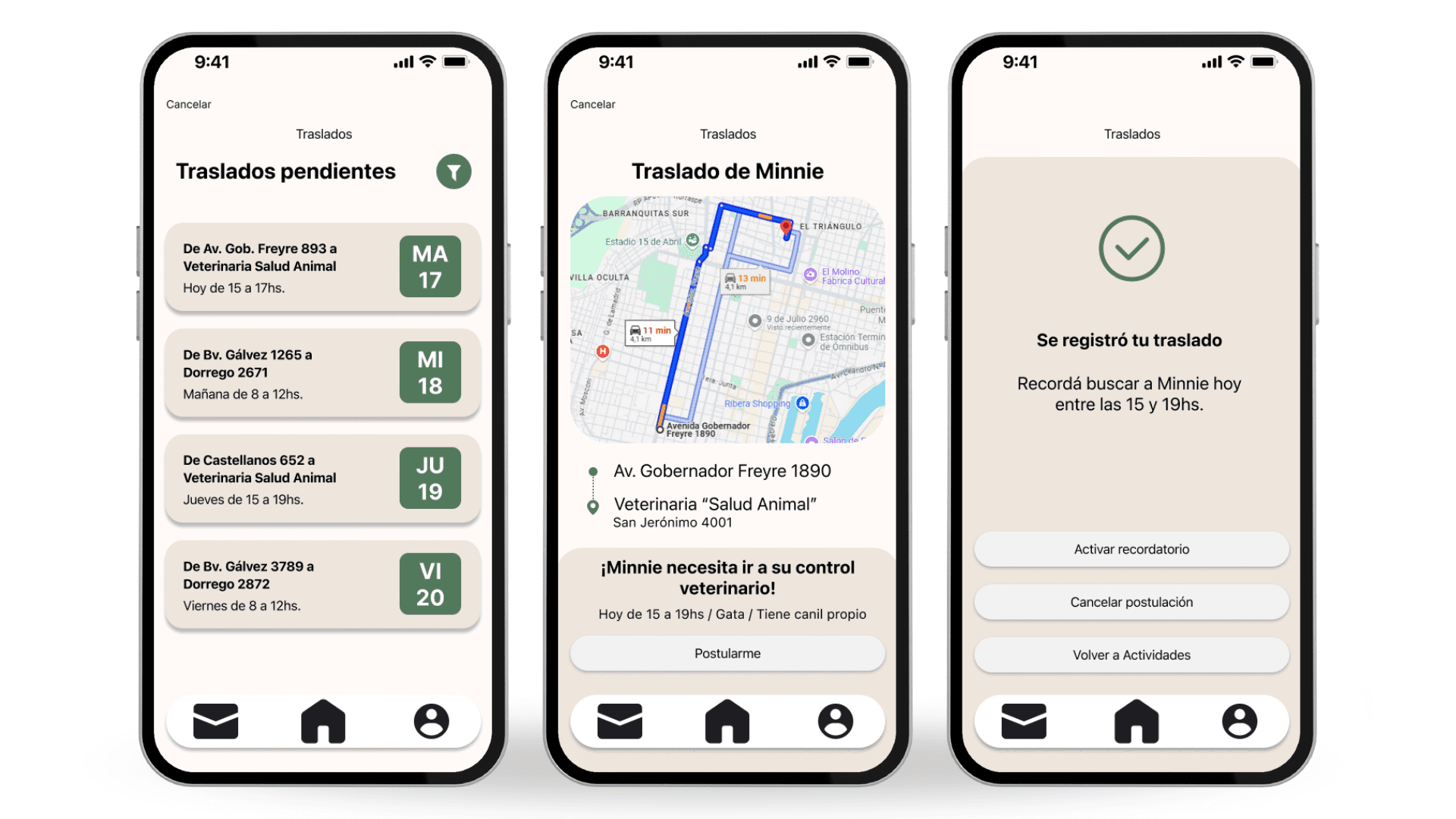
We use a fixed tab bar with clear icons that allows easy movement between “Messages,” “Home,” and “Profile.” Its proximity to the touch area facilitates navigation.
Card Pattern:
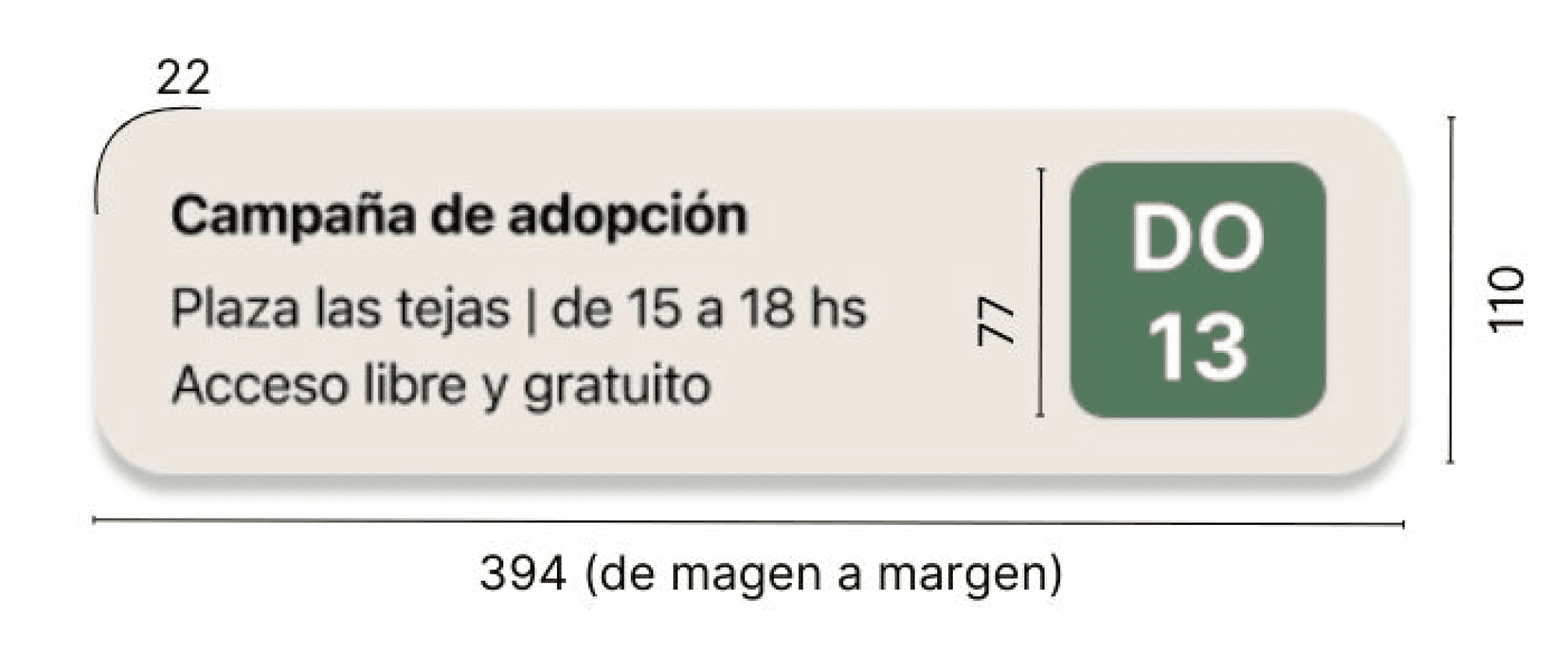
Key information (scheduled events, transfers, tasks) is organized into rectangular cards, a pattern that facilitates scannable reading and touch interaction.
The cards include summarized data (date, place, type of event) and allow for quick access to information without the need to open other views.
This pattern follows the modular logic of Material Design, though adapted to the minimalist style of iOS.
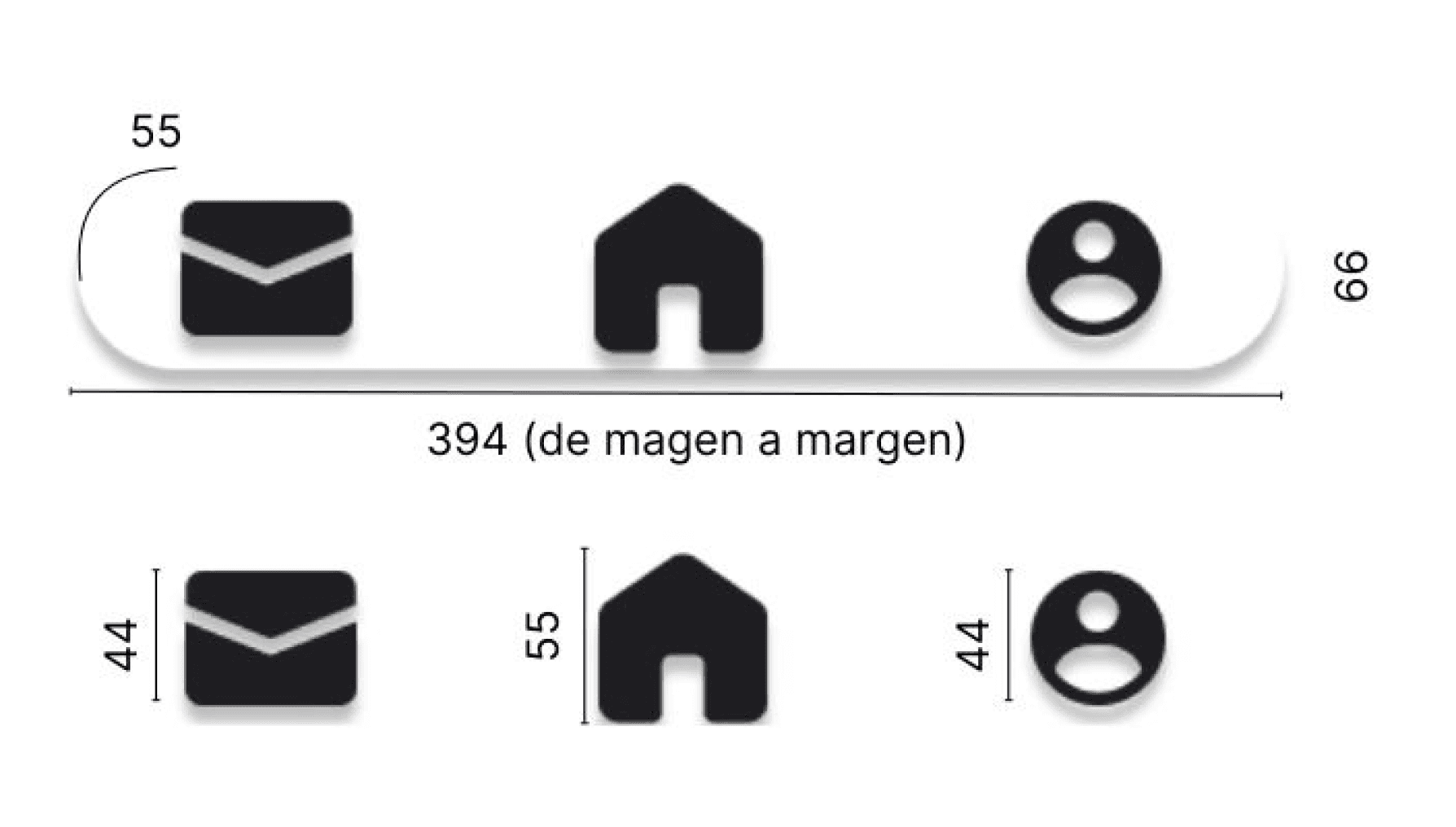
For the design of this interface, we used grids and layouts based on our operating system: iOS, so the grid used has a base of 11 xp, the same measurement as the streets or spaces between columns, and the margins are 18 xp.
A structure of 3 columns was chosen, as this configuration allows for the correct arrangement and alignment of the bottom tab; but it also enables the use of additional modular blocks (highlighted in green) that help maintain a clear visual rhythm and intuitive navigation.
All measurements employed follow a modular proportion based on multiples of 5.5 xp, which provides consistency and uniformity in the design but also facilitates scalability and adaptation to other components of the interface.
Onboarding
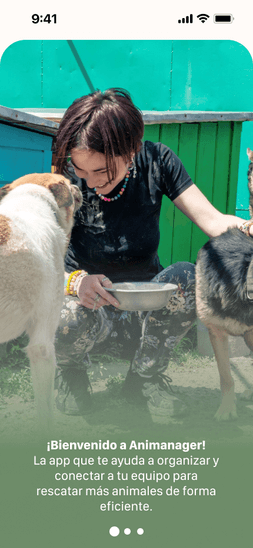
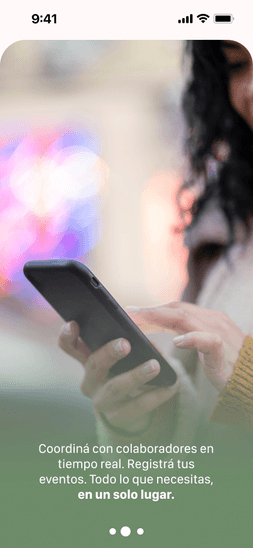
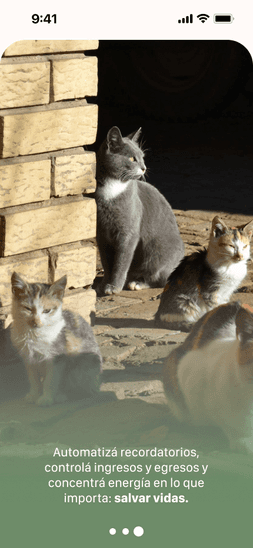
We design onboarding cards so that people who enter the app understand what benefits it will bring them and how they can use it.
Throughout the app, we use real photos with the intention of helping people empathize and get involved in helping.